About Me

Newfoundland, Canada
I've been a big anime fan for about 10 years or so now. My five all-time favorite animes at this point are, in no particular order... Puella Magi Madoka Magica, El Hazard: The Magnificent World, Love Live!: School Idol Project, The Melancholy of Haruhi Suzumiya, and Magical Girl Lyrical Nanoha. However, there are hundreds of anime shows that I like. The main purpose of this blog is to provide meta-commentary on anime, and the anime industry - to try to cast a critical, though appreciating, eye upon this entertainment genre that I believe has tremendous potential, but can also be easily wasted. I have always been a fan of animation in general - in the 80s, I grew up on western cartoons like He-Man, She-Ra, Transformers, and G.I. Joe. Through out the 90s, I was a hardcore comic book fan, for the most part. I'm also a big fan of Star Trek. Right now in my life, though, anime is my principal entertainment passion.
Showing posts with label K-On. Show all posts

Thursday, November 25, 2010

Why is "The World God Only Knows" struggling so much?


The most hardcore anime fans, such as many regular posters on Anime Suki, usually have a pretty good idea of which animes will be successful, in the sense of ratings, DVD/Blu-Ray sales, and related merchandise sales. They keep persistent track of which animes will be coming up in the following season, which animation studios will be handling each of them, how popular the source material (if there is one) for the various animes are, and the overall vibe surrounding each of them. They tend to have their finger consistently on the pulse of the anime industry, the anime fandom, and key related fandoms (manga fans, light novel fans, eroge fans, etc...). I myself follow anime somewhat closely, but I don't keep tabs on this wondrously wider world of the modern otaku with quite the admirable thoroughness and zeal as these folks do.

So... when an anime does significantly worse than initially expected or hoped for by these hardcore anime fans, it becomes an intensely intriguing intellectual curiosity for me. This was true when the heavily hyped Umineko anime bombed, and it's also true now with TWGON (which is the acronym I will use through out the rest of this post to refer to The World God Only Knows) likely suffering a similar fate.

Sunday, November 21, 2010

K-On!! Review Part 2 of 2


First off, apologies to long-time readers for not getting to this sooner. I know that I scrounge up regular readers about as well as Afternoon Tea Time scrounges up new members for the Light Music Club, but still, Ritsu would not have left you hanging for almost two months, and I should not have either. 

That out of the way, I'm going to pick up this series review where I left off at the end of Part 1. Just to remind everyone, Part 1 of my series review dealt with the first 13 episodes of K-On!!, while Part 2 will deal with the second half of the anime. And also to further refresh memories, Part 1 of my review dauntlessly delved deeply into the inner conflict and workings of this anime's leading group: Azusa, Mio, Mugi, Ritsu, and Yui

There I spoke at length of the ideological conflicts pitting the lighthearted procrastinators Ritsu and Yui against the relatively stern and serious Azusa and Mio, with Mugi caught inbetween. I perhaps exaggerated the severity of that conflict, as the second half of this anime quickly resolves it, and is mostly free of it.

Friday, October 1, 2010

K-On!! Review Part 1 of 2

Yui against the World...

I recently decided to start watching K-On!!, the artist formally known as K-On! In anime, you see, exclamation marks are always in style, and this particular anime show even uses them in place of Roman numerals. A friend joked to me that a hypothetical fifteenth season of K-On! would be called K-On!!!!!!!!!!!!!!!, to which I quipped that only one man could ever pronounce that name correctly...


"K-On!!!!!!!!!!!!!!!"

Sunday, September 19, 2010

Anime: Nostalgia Entertainment?


There was one scene in Angel Beats! that I didn't touch on much, even though some of the ideas conveyed by it were potentially powerfully poignant, and likely very telling. I didn't touch on it much because it was suggesting a general truism of sorts about anime today which transcends Angel Beats! itself, and hence I didn't want to spend much time on it in an actual Angel Beats! review. That truism is that modern anime intermittently intensely idealizes school life. 

Sunday, June 6, 2010

Defending Moe


Welcome back, everybody!

After a two-month long hiatus, I've decided to make a short return to focus on a topic of much contention within modern anime fandom. And that topic is moe.


No, no, not you, Szyslak. Your dirty secrets are quite safe on this blog.

But the dirty secrets of this kind of moe is what this blog will be delving into.

And what do I mean by "dirty secrets", exactly? Well, 'dirty' might be blowing it out of proportion a bit, because it's nothing particularly scandalous. But they are the sort of secrets that a lot of people would rather not see the light of day. Before getting into what those secrets are, let's put forward some basic facts on anime that serve as important background for our upcoming Detective work!


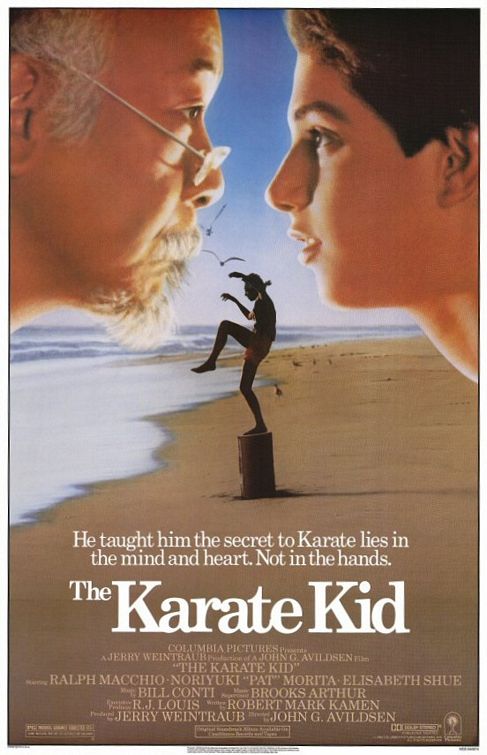
One such fact is that anime, beyond its own borders of course, is a cultural export of Japan. Arguably Japan's most well-known cultural export, although karate and its teachers were pretty big back in the day too.

What we can easily deduce from this fact, my fellow Jimmy Kudos, is that anime reflects the current cultural norms and values, and hence sociological conditions, of modern Japan. In other words, the rise of moe did not occur in a vacuum. It wasn't simply the exotic brainchild of some powerful corporate executive. Something in the modern Japanese culture and/or society gave rise to it.

Some critics of moe argue that this something is simply sexism, and a culturally ingrained overarching chauvinistic patriarchy that reinforces it. In the eyes of these critics, the prevalence of moe within modern anime reflects a desire within many otakus for weak, submissive female partners.

However, that doesn't really make a great deal of sense to me.

Why?

Well, here's one reason why:

Nobody takes a punch quite like Keitaro does...

Love Hina! is one of the more prominent harem animes, and arguably popularized the genre. Being a harem anime with a large variety of female characters within the cast, it also no doubt contained moe.

If the dirty secret of moe was sexism then one would expect for the male leads of moe-centric shows to be paragons of traditional masculinity. To be real gar guys.

To be more...


And less...


"This. Is. Sexist Sparta!" ?

No, rather...

"I-I'm just the doormat messenger! Nobody kills the doormat messenger!" ;)


Now, don't get me wrong, anime does have it's real gar guys. But it's not often you see them alongside the most moe of females. It's probably fair to say that the target audience for Gurren Lagann is a bit different than the target audience for K-On! Or, at the very least, that the two anime shows are meant to have very different sorts of appeal.

To truly discover what's driving the popularity of moe in recent years, we have to uncover what's happening in Japan that might be giving rise to it. After all, the rise of the internet coupled with Japan's Lost Decade were in turn the catalyst for somewhat dark and philosophical musings on modern technology in the form of animes like Serial Experiments Lain, and Ghost in the Shell.

So what modern issues in Japan could logically give rise to moe?

The key clue is to be found here.

That's a long write-up, but let me sum up the pertinent points here:

  • Japan has an aging population
  • The nation's fertility rate in 2008 was only 1.37 (a healthy norm is 2.1).
  • Up to 80 percent of Japanese singles over the age of 30 don't have a partner.
  • A "Parasite Singles" lifestyle (i.e. being a NEET) has become more prevalent.
  • Male temp workers, or those on low salaries, have virtually no chance of finding a marriage partner.
To put it into laymen's terms, this is a growing issue in Japan: Adult males and females in their 20s and 30s that are unable or unwilling to find steady work, are supported by their parents, have not smoothly transitioned into adulthood as their culture and society would have liked, and (here's the key part) have great difficulty in forming lasting romantic bonds.


So, let's break this down to the individual.


You're a Japanese man in his mid-to-late 20s or early-to-mid 30s that has had little to no luck with the opposite sex. You're either just making ends meet, or you're being supported by your parents.

Chances are that you look back quite fondly on your high school days, given how you had fewer cares and less concerns back then, than you do right now.

Or, perhaps you look back on your high school days as a time of missed opportunity. If only you had met that right young woman; the young woman who would actually accept you for you; maybe things would have turned out differently for you.

Yes indeed, you may be very insecure, and shy around women, knowing instinctively that your socioeconomic status does not lend itself to finding female mates in Japan's current society and economy. You may not have had sexual relations with a woman in a very long time, if ever.

You want to find entertainment that offers you some sort of blissful escape from the bleaker aspects of your reality.

What are you likely to turn to? Who are you likely to turn to?

Are you going to turn to entertainment with strong, firmly independent, and very competent female characters who would have no use for a loser like yourself? Are you going to dream about women impossibly out of your league, or at least that's what you think they are?

No, you're going to turn to entertainment featuring NEETs like yourself:


One of my earliest blog entries delved into how K-On!'s popularity probably lay, at part, in its natural appeal to the NEET demographic. Yui's appeal does come in large part because of her airheaded nature, and tendency towards goofing off, and eating cakes instead of practicing her guitar. But it has nothing to do with sexism. Quite the contrary, it has to do with the "Parasite Single", or lowly paid single, male viewer being realistic about the sorts of females he could ever hope to catch in modern Japan. Someone very approachable, cute and cheerful, but a fair bit airheaded and almost wastefully playful, is perhaps as good as it gets.

This even explains high-achieving tsunderes like Haruhi Suzumiya and Shana. The male viewer realizes that to win over a strong young woman like them, the young woman in question would need to be a bit eccentric and/or have a heart that could be won over by appeals other than simple socioeconomic status.


And this is why I defend moe in this blog. A lot of it is wish-fulfillment, but it's innocent wish-fulfillment. It's about anime presenting female characters that the male viewer could feel comfortable approaching; female characters that wouldn't make him feel hopelessly inferior to her or out of his league.


Beyond this straight-forward eroge game-esque romantic appeal, there is another aspect of moe that bears looking at. And that aspect is how perhaps moe is meant to counteract the stiff sociological socioeconomic structure of modern Japan.

Moe girls are often carefree. Innocent. Playful. They are not jaded, or cruel. They are often caring and genuinely nice. They often lack competence but at least they have a good heart.

And perhaps a lesson that comes from moe is that there is value to simply being a good person. That there is value to being a caring person who wants to help out other people, and have real friendships. And that people like this, no matter how airheaded they may be, are deserving of protection, yes.

Personally, this is something I saw a lot of in this anime:


The hatred that Nagisa Furukawa receives from some corners of the online anime community is a bit surprising to me. Perhaps we in the west have become overly accustomed to fictional characters that are ubercompetent. The forensics experts of CSI, the lawyers of Law and Order, and the effective gamesmanship of winning Reality TV contestants.

Competence, intelligence, shrewdness, efficiency, and pride in one's work: these are all highly valued in the western world. And rightly so, they are invaluable to have in a society.

You need all of those aspects to make this possible.

But to make something like that worth it, it helps to have good people with good hearts worth making that effort for. Good people like this:


And that, friends, is the heart of moe.

It's about characters that may be very flawed, but come across as approachable and friendly.

It's about characters that the domestic (and in some cases foreign) NEET audience wouldn't feel are out of their leagues, perhaps even as just friends.

And it's about characters that do in fact cause feelings of protectiveness to arise from within the viewer; not just because they're vulnerable, but also because at their cores they tend to be good people deserving of the effort to protect.


All of that being said, I will certainly concede that moe may be a bit too prevalent in anime today, and I certainly understand criticisms of it under that basis. However, I don't think that moe's very presence is as insidious as some make it out to be. It does reflect on a sad reality in Japan today, but moe itself does not push for a sexist reality.

And with that, I rest my case when it comes to defending moe.


However, I may branch off of this blog entry to discuss fanservice, and one other key point, pertaining to anime today.

But for now, that's all.

Any and all responses are welcomed. :)

Sunday, August 16, 2009

Moe is Neet!

Apologies to Slice of Life, of Anime Suki, for stealing his bit. But we all know what the Simpsons has to say about stealing somebody's bit, so I hope Slice of Life won't hold it against me. :D

Anyway, I have a confession to make.

A rather big one.

Even though I've made a fair number of comments on it, and frequently criticized its art style... I never watched K-On. I spoke of it simply based on a couple short YouTube clips I had seen of it, as well as from what basic second-hand knowledge I had of it.

The show concept just did nothing for me. A show of nothing but female characters, the main ones of which making a rock band, in this art style, and... its not Strawberry Panic-esque, so it probably has no romance or 'hotness' to speak of... yeah, I wasn't seeing the appeal. I especially wasn't seeing the appeal for a male viewer, and frankly, I still don't... well, with one possible exception that I'll get to in a bit. It's a rather neet exception, shall we say. ;)

However, now that I've started a blog on anime, I almost felt that it was my duty as an anime blogger to watch and evaluate one of the best selling animes of all-time. So, yesterday, I sat through and watched seven episodes of K-On.

It's... watchable, at least in quasi-marathon way. I imagine that the plot seems rather plodding to somebody who wants to hear the band actually play, and who waited from week to week to watch each new episode. Nonetheless, these are my general impressions...

Episodes 1 and 2 - Solid start. Good plot. Some of the jokes are lame (especially the slapstick comedy), but I did like the way the story brought the key characters together. It didn't feel forced at all to me. Instead, it felt very natural.

Episode 3 - Pretty boring. It had a couple funny moments, but I would have liked to had seen a bit more emphasis on the band, instead of focusing almost exclusively on studying for and taking tests or make-up exams.

Episodes 4 through 6 - Very nice conclusion of what, to me, felt like a 6-episode opening arc. Taken together, these three episodes flowed very nicely... though I imagine 4 and 5 might have left some viewers impatient if they had to wait a week or two for the obvious conclusion of the build-up to be realized. Knowing that I'd only have to wait a short period of time to see the realization of the build-up enabled me to enjoy episodes 4 and 5 with less unrealized anticipation than what I may otherwise have had. Episode 6 was sincerely cute and fun.

Episode 7 - Genuinely nice heartwarming Christmas special. I very much like the relationship dynamic between Yui and her sister.

K-On has about a 1:1 ratio of good jokes to lame jokes for me... and I can live with that. I won't rave about it, but I won't rip it apart either. Rarely got more than a chuckle out of me, though; paling in comparison to what even the latest episode of Haruhi managed to do for me.

K-On isn't what I would call bad, necessarily - it just fails to stand out much to me. It's like a serviceable NHL defensemen: Plays his 20 minutes, does Ok, does his job, clears the corners about half the time, makes a couple decent outlet passes from time to time but certainly can't quarterback a power-play, maybe gets five goals a season, but all told - he's not a weakness; he's just not a stand-out strength either.

So why does he have the top salary amongst all NHL defensemen?

In K-On's case, why does it sell so well?

Well, that brings us back to the title of this blog entry: Moe is Neet!

Moe is a bartender serving up cuteness.

And the Neet? Well, Yui is the neet. Yui, in one of the first lines in the first episodes, is even warned that she may become a neet, instantly causing the neet viewer to identify with her. Over on Anime Suki, I argued that I didn't see where the male touch-point (i.e. the character that you identify with and live vicariously through) for this anime is. Well, now I can see a male touch-point of some sort at least...

Yui is terrible at school, has a hard time concentrating on her work, does virtually nothing in her spare time (going by her own words)... but she's an affable, harmless character for the most part with an obsession over cute things. Replace Yui's obsession with cute things with an obsession over alcohol, and you get a pretty good description of this guy...


And if you replace this guy's obsession over alcohol with an obsession over cuteness, you basically get the modern NEET. I remember reading an editorial once talking about how Japan has recently endured a large growth in its NEET population. Britain is going through the same situation from what I've read... so could many other countries.

NEET, for those who don't know, is a person "Not in Employment, Education, or Training". Basically, a NEET is somebody currently outside 'the system', who probably has loads of free time and who is presumably (if they're not poor and destitute) making due on income from parents and/or government assistance. The more well-to-do NEETs have loads of time to kill, and some disposable income to burn, and hence can feast upon entertainment for hours upon hours upon hours each day. As with any viewer, they like to see somebody they can relate to. And here we have Yui of K-On - the NEET icon for any NEET, male and female alike.

So, our good bartender Moe serves up beverages of intoxicating cuteness to our NEET friend Yui Barney. Yes... K-On's success is all starting to make sense now, isn't it? ;)

Ah, but there's an added twist! One of Yui's friends and band-mates is a drummer named Ritsu. Ritsu's a fun little character - basically a poor man's Haruhi Suzumiya with out the reality altering powers or cosmological intrigue.

And who is Yui must like of all of her friends? Why, who else but Ritsu!

Particularly when on the beach, Yui and Ritsu are almost just alike one another. So, you see, neet KyoAni fans of Haruhi, now you; yes, you! - can become "Haruhi's" best friend - through experiencing life through the eyes of Yui as you play around on the beach with Ritsu Suzumiya.

And then, to complete this bold process of capturing the NEET market, KyoAni gives us this...

Do you see the bold full circle now, my friends? Do you see KyoAni's master plan in all its glory? You identify with Yui while you play with Haruhi-esque Ritsu and watch Yui become increasingly like her... and then the actual Haruhi is made to look like Yui! Now, the hope is that the NEET fanbase will all identify with Haruhi directly; classic bait-and-switch, with Ritsu acting as an important bridge point! I guess that KyoAni didn't feel that Kyon was up to the job of being the fan's touch-point. Perhaps he's simply not cute enough for the job anymore, especially with all that brow-furrowing that he does.

After all, we may be entering into a new age in anime - the Age of the Moeblob. But... that's a topic for another day.

All told, I now see why some male fans would hold a particular interest in K-On. I see how Yui is the touch-point for neets everywhere; she's not just cute, Barney, she's just like you as well! ;)

I'll leave off by saying that I don't hold much against NEETs, and that this post is made in good fun. In this world economy, especially, it's understandable to be a NEET, and I myself have been a NEET in the past, most recently after leaving my job of two years to further my education. There was a significant interim period between the two (my last day on the job and the start of my education) where I was a NEET.

However, it's interesting to seriously conceive of NEETs as a very powerful consuming target demographic. What will that mean for future animes, I wonder? Will we have more Yuis, and fewer hardworking diggers like Simon of TTGL?

I guess only time will tell.

Thanks for reading, and I look forward to any and all replies. Meanwhile, MOE's Bar is just down the corner, currently being ran by KyoAni and Kadokawa, and Moe is serving the cutest beer you've ever seen. I've sure you'll find plenty of neat Barney's there... ;)